

Flight: A Lifelong Love

Updated: Aug 29, 2025
I sit staring down at the gap between the Isle of Wight and the British southern coast. The airliner banks further, and I catch ‘The Needles’ jutting out to sea, with its tiny stripy lighthouse on the final rocky ridge.
Should I? Shan’t I? I keep asking myself.
A shudder ripples through the aluminium tube as we enter candy-floss clouds, brighter than the blue sky around them. The wings wobble gently as we climb toward 38,000 feet. Why are horses measured in hands and everything else in feet? Useless questions float around my mind, alongside more important ones. For months, I’ve been wondering what it might be like to retrain as an airline pilot.
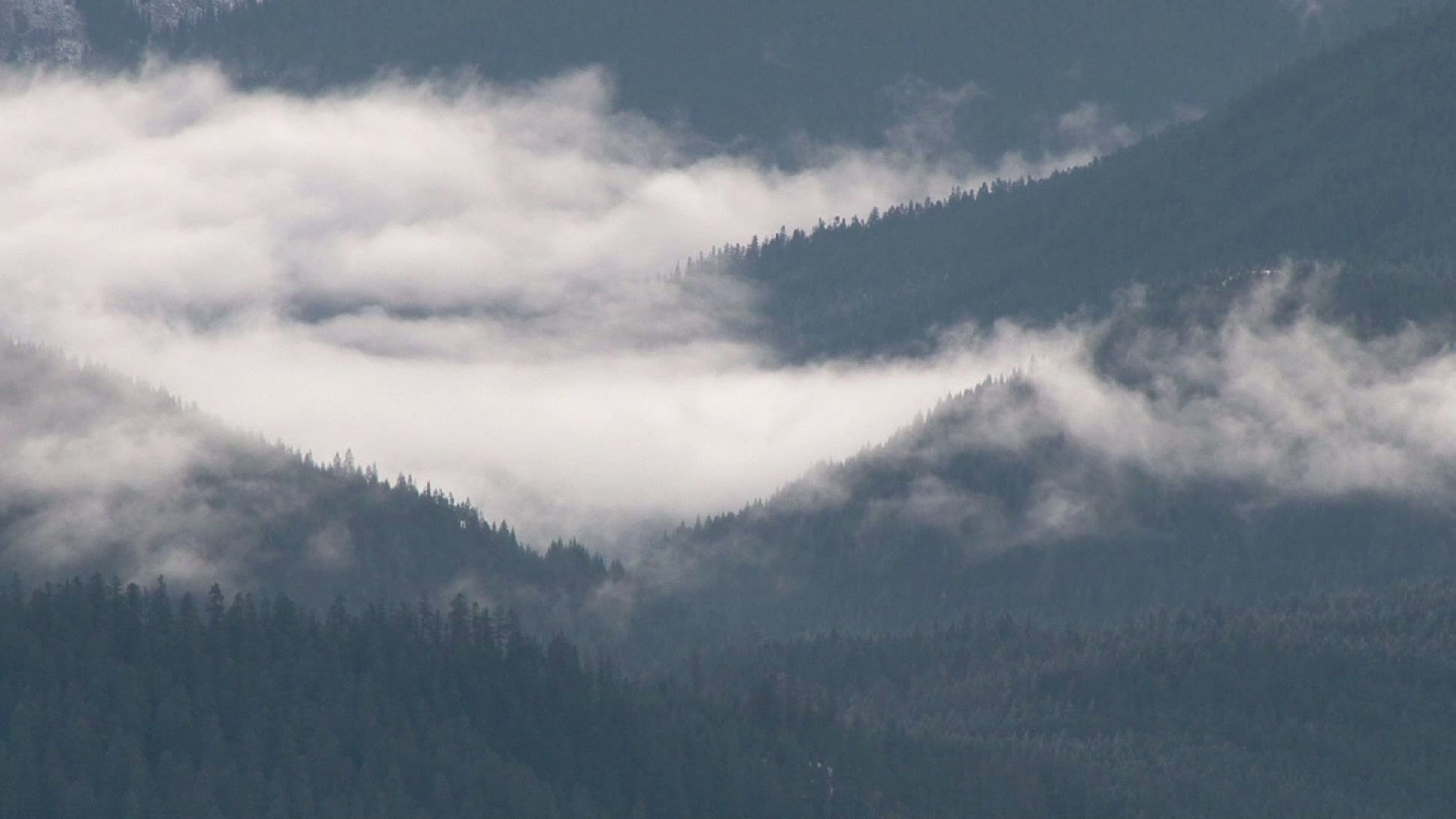
As we level off, a calm settles - the gentle roar of air outside, the trickle of coffee into my paper cup. A flight like any other, yet - as ever - I’m one of the only passengers with the window blind up, mesmerised by the patchwork of blue, green, grey and every other colour spread out below.
Perhaps the appeal of flight, at its heart, is that imagined sense of soaring freedom.
My flight is bound for Santiago, Spain. I’ll be spending a week hiking a section of ‘the Camino’. At seven miles above the Earth, I close my eyes as the journey gives me time to reflect. I’ve been investigating this possible career change for many months now.
I believe in air travel because I believe in cultural exchange, and in the chance for people to see the world, if their circumstances allow. The growing ranks of brilliant engineers working on the green energy aircraft of tomorrow give me hope, even if the journey is far from finished.

Memories
I have always loved flying. I even used to find airports exciting. At take-off, I love the power of the thrust pinning me back in the seat, the increasing blur of the terminal buildings, the moment when we get airborne and climb. I love looking down at the traffic on motorways, which look like tiny ants, until eventually they disappear and the towns and cities become but shapes on the quilt-work of the earth.
Lifelong learning and building new skills are core values of mine. Most businesses and organisations obsess over them too, but even the most high-flying of job specs list ‘skills’ which rarely make any sense to anyone outside of their niche. So much of modern work is abstract - neurons firing, fingers tapping on keyboards. Flying, by contrast, is tangible. It’s a skill that demands presence, precision, and practice.

I’ve got so many lovely memories of air travel, but a few stand out. At age seven, I remember going to southern India to visit family on an old Caledonian Airways TriStar - the one which had a third engine on top of the fuselage by the tail. That trip was very meaningful for me, connecting with family and culture on the other side of the world. As we took off to come home, I felt sad. Below, women in colourful saris swept the runway with long coconut coir brooms - a scene from another time. One moment they were there, the next, we were over the Arabian Sea and away.
Years later, aged sixteen, I travelled with my family to Malawi, where my Dad had grown up. I had raised a few thousand pounds for an AIDS orphanage (apologies for the humble brag) and had with me one of those comically large metre-long cheques rolled up under one arm. My father hadn’t been back since he was twenty. He used to tell me how, at Chileka Airport in Blantyre, people gathered to watch on the roof of the terminal, in their Sunday best, turning the arrival of planes into a social event. So when we touched down, we were surprised to see that this quaint practice was still happening in the 21st century. I’ve never been somewhere where there was such a joyous energy at an airport.

Recently, the more I secretly dreamt of becoming a pilot, the more such memories started coming back. I began to read Skyfaring by Mark Vanhoenaker, a rather poetic book about his life as a British Airways Captain. I was so taken by it that I tracked down his email and asked if he fancied a coffee. The surprisingly offline world of an airline pilot meant it was some time before I heard back. In the meantime, more memories started to resurface.
At twenty, I had set off from the UK to work as a Landrover driver in a Safari Park, 100km south of the Zimbabwe border. A colourful South African Airways 747 Jumbo took me down the spine of Africa on an overnight flight. It was a full moon, and when everyone else was asleep, and the cabin dark, I was, as ever, looking out of the window. Below lay a watery mosaic. Under the moonlight, rivers sprawled like molten silver spilled across the earth. The sheet water of a floodplain glowed iridescent against the dark breathing mass of what I assumed must be forest. On arrival, the pilot was standing bleary-eyed by the door, and I asked him what I had seen, and how a scene rendered only in black and white could be so beautiful. It was the Okavango Delta.
Fast forward fifteen years, and I was on a business trip from London to Sydney via Hong Kong. A cyclone meant the Cathay Pacific jet took a highly unusual flight path. At around 3 pm, the Captain rolled the plane left and right to allow both sides to peer down out of the windows. Simultaneously, he made an announcement. “Below us is a sight I’ve never seen before, and you may only ever see once in your lives”. I looked down and my heart jumped. We were soaring above the summit of Mount Everest.

Decide
Mark’s eventual reply is warm, friendly and highly precise. We are to have coffee near London’s King’s Cross in 2 weeks, and he is going to wear a blue shirt.
The morning arrives and I worry about what colour shirt I might wear - something I rarely think twice about. He tells me all about his life and how most pilots can’t imagine doing anything else. Now in his fifties, he was previously a McKinsey Management consultant in his thirties, before making the switch.
He likes the fact that when he’s off, he’s off. No emails, nothing, nada. He enjoys how, during the eighty per cent of the time that the 787 flies itself, it allows his mind to subconsciously work on more creative ideas. He’s a prolific writer: for the FT, the New York Times, and others. He often writes about the cities his job takes him to, for those brief 24 or 48-hour stopovers, before he has to fly back.
He recommends trying a simulator to see what it’s really like. Weeks later, I sit in the cockpit of an Airbus A320 - lifted from the plane and enclosed in a big black box of screens. This is what pilots are tested in annually. The simulation is astonishingly real; my mind fully believes I’m in the air.

I sit alongside a copilot, and he coaches me through take-off, and we begin a flight from London Heathrow to Berlin.
Take-off and landing are both technical and exciting, yet most of the flight is spent ‘in the cruise’, on autopilot, whilst we spend the time monitoring the bank of flight computers in front of us. There are some nice views: much more impressive than from your typical window seat. In the foreground of the cockpit, there are huge swathes of switches. I’m told to flick some of them, but really, I have no idea what I’m doing. It’s still quite a mechanical profession, and becoming a master of all these switches, buttons, and levers must be very satisfying.
What moves the plane the most is something that looks like an afterthought: a tiny joystick, offset to one side. I operate it with neat, precise movements of my right hand. I bank the aircraft to the right before we come into land. Afterwards, there’s time to get up, stretch briefly, go through several important checklists, and prepare the plane for the return leg. As a short-haul pilot, you do this 3-5 times a day, having got up at 3 am.
Perhaps the appeal of flight, at its heart, is that imagined sense of soaring freedom. Yet as I cycle my bike through sunny London later that evening, and again as I drive my car across the Brecon Beacons later that month, I can’t help but think these things provide a far greater sense of freedom, and yet are so much more mundane.

Every career has its pros and cons, and it’s important to ask ourselves what combination of upsides and downsides we want. In my research, I met several airline pilots. What struck me most was the loneliness of the profession. Each flight crew is assembled for a single journey, all strangers to each other. You work as a close-knit team for a day, then disperse, rarely - if ever - to cross paths again. Years can pass before you see the same colleague twice.
I was also amazed to find out that it’s necessary to book annual leave over a year in advance, even for a single day off. Then there was the guaranteed missing of birthdays, Christmases, celebrations, public holidays and community events. It’s an issue that even the most senior, long-standing captains have to wrestle with.
I watch the recent retirement video of a pilot I knew growing up. On his final flight, he stands at the front and addresses a planeload of people, as the sun sets on his flying career. He’s enjoyed it, and yet he more than hints at the challenges of living a life out of sync with other people.
Being awake when everyone else is asleep, or needing to be sleeping during your ‘days off’, to prepare for the next flight, whilst everyone else is living their lives. In short, it seems like life lived in a parallel universe to everyone you know and care about, but without the camaraderie of an ever-present group of colleagues to carry you through.
Then there is being strapped down to a chair for many hours a day. For someone who loves to move and even finds offices a sedentary struggle, the idea of being ensnared in a four-point harness and only being allowed to stand up to go to the toilet seems awful. I can’t help but think how there must not be many jobs that are so far away from the original childhood dream of it all. The list seemed to go on and on, and ‘wishing I knew what the job was like beforehand’ was one of the most common regrets cited in the profession. It’s also a job - like many jobs - that seems to have had significantly better working conditions in the 1980s and before: better rostering, more time, less optimised for airline profit at the human expense of its staff.
There are so many unexpected downsides to this job that if you want to know more, it is best to read the candid report written by a current EasyJet captain, which I will link to at the bottom of the page. Be warned, it’s seventy pages long!


Landing
Somewhere between all these thoughts, I realise I’m still at 38,000 feet, still on my way to Spain. Despite everything pointing towards a ‘no’, I’m still so taken with flying that I know I can only make that final decision once I’m back on board a plane, actually in the air - and now, here I am. So I open my eyes and look out the window, back from memories, dreams, and turning the problem over in my mind. We descend over the Spanish coast, and below us are several square miles of anchored cargo ships, each with thousands of truck-sized containers onboard. From up here, they look like toys.

I get off the plane, and I think about how much I respect pilots, and what an incredible skill it is, and yet for me, the downsides do not seem worth it, even if some pilots say they can’t imagine doing anything else. With that closure comes a tinge of disappointment. But a disappointment mixed with gratitude, for it’s been an adventure in its own right, investigating it all, over the course of this summer. I’ve enjoyed it immensely.
Sometimes, the way we answer a calling isn’t by following it exactly, but by finding other ways to keep it alive within us. I’m aware that there are other, more amenable, types of flying than being an airline pilot: air ambulance helicopters, cargo planes, and more. Looking down on the earth from above will always be what is most special about flight for me, and I know I can get that as a passenger in the window seat. I’m already an avid drone photographer. I also know that beyond this, I would still like to take things up a level. So, over the next few years, I intend to seek flight in other forms: I’m keen to try a hot air balloon flight over the open countryside, as well as having a go at skydiving.

I step out of the quaint Santiago airport and into the Galician sun to start the Camino hike. It’s summer and the nights are long, but in a few months it will be colder, and the nights will draw in early. The world will seem smaller, quieter, life more insular, behind closed doors. A long winter will stretch out ahead and I will be looking forward to Spring once again. My eyes will be drawn upwards into the indigo dusk, as they always are at that time of year. Mark Vanhoenaker’s words from Skyfaring will never feel more resonant:
“We may be pleased by the still-glinting wings of an airliner high above us, leaving a contrail soaked in crimson light, while at street level the sun has already set. We see the plane we are not on, bound for a place we are not, in the last light of a day that has already left us.”
Perhaps that is also what I find captivating about flight. The way it allows us to feel so small in a big sky, to feel our constraints of time, and the fleeting impermanence of our human lives. There's beauty in that.
——————————————————
Further reading: the reality of the job by a current EasyJet captain


Comments